
Search “car hire Kenya” and you’ll get thousands of results — international booking engines, decades-old local operators, boutique safari companies, and everything in between. For a first-time visitor, an NGO logistics officer, or a corporate travel coordinator, that volume of choice creates a real problem: how do you actually tell a reliable operator from a risky one before you’ve handed over a deposit?
The good news is that renting a car in Kenya doesn’t have to be a gamble. Most of what separates a smooth rental experience from a frustrating one comes down to a short list of concrete things you can check before you book — not after something goes wrong on the road to the Mara. This guide walks through exactly what to look for, in the order it matters most.
Why This Decision Deserves More Than Five Minutes
Kenya’s roads range from smooth tarmac highways to deeply rutted park tracks that can strand an underprepared vehicle for hours. A cheap daily rate that looks great on a comparison site can turn into a very expensive mistake if the vehicle isn’t properly maintained, the insurance terms are vague, or the company disappears the moment there’s a dispute.
This matters even more for three groups specifically:
- Tourists, who often don’t know Kenyan road conditions, may not speak the local language fluently, and have no local network to call on if something goes wrong.
- NGOs, who typically need reliable long-term or block-booked vehicles, consistent invoicing for donor reporting, and a fleet that can handle field conditions without constant breakdowns.
Corporates, who need dependable transport for staff and visiting executives, often with short notice and little room for scheduling failures.

With that context in mind, here’s the checklist.
1. Check the Insurance Excess — Not Just the Daily Rate
This is the single most important line item to understand, and the one most travelers skip past. The “insurance excess” (sometimes called the deductible) is the amount you’re personally liable for if the vehicle is damaged or stolen during your rental, even with insurance in place.
What to ask:
- What is the excess amount, in actual currency (not just “low” or “affordable”)?
- Are there separate charges for Collision Damage Waiver (CDW), Theft Protection Waiver (TPW), or Extended Liability Waiver (ELW) — and are these included in the quoted rate or added later?
- Does the excess apply per incident, or is there a cap for the whole rental period?
A rental that looks cheaper upfront can end up costing far more if you’re on the hook for a large excess after a minor incident, or if CDW/TPW/ELW charges are quietly added at pickup. Ask for these figures in writing before you commit.
2. Verify the Fleet Age and Maintenance Standards
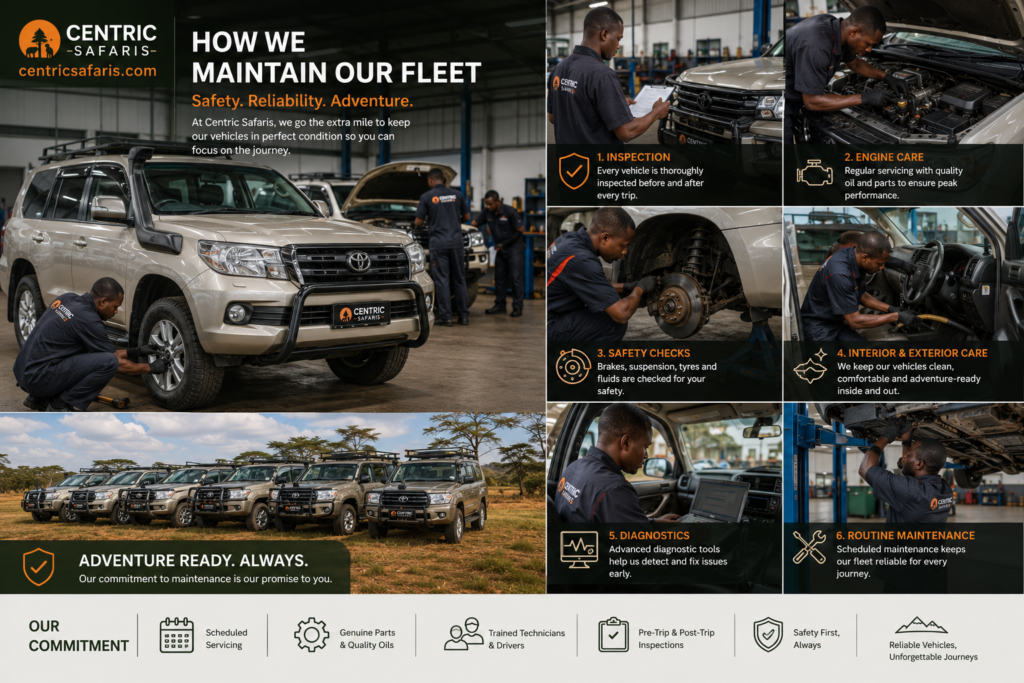
Ask directly: how old is the vehicle you’ll actually be driving, and how is it maintained? A reputable operator should be able to tell you the vehicle’s age, service history, and whether it was purchased new or imported second-hand.
What to look for:
- Vehicles serviced on a fixed schedule (not just “as needed”)
- A fleet that’s regularly refreshed, not running the same vehicles for a decade-plus
- Clear answers about what happens if the vehicle breaks down mid-trip — is there roadside assistance, and is it 24/7?
For self-drive safaris in particular, this isn’t a minor detail — a breakdown in a remote part of Amboseli or the Mara is a very different problem than one in central Nairobi.
3. Understand Exactly What’s Included in the Quoted Price
Kenyan car hire pricing can vary widely in what’s bundled into the daily rate versus billed as an extra. Before comparing prices across operators, make sure you’re comparing the same thing.
Confirm whether the quoted rate includes:
- Unlimited mileage, or a daily cap with an overage charge
- Fuel policy (full-to-full is the most transparent and common standard)
- Airport or hotel delivery and pickup
- A second driver, if needed
- Child seats, camping gear, or other add-ons
- VAT and any government levies
A rate that excludes several of these can look far more attractive on a comparison page than it actually is once the full cost is calculated.
4. Ask About Booking, Payment & Cancellation Terms
Key questions:
- What deposit is required, and is it refundable?
- What payment methods are accepted — bank transfer, card, mobile money?
- What’s the cancellation or date-change policy if travel plans shift?
- Is there a written contract or booking confirmation, or is everything informal over email/WhatsApp?
For NGOs and corporates especially, clear invoicing terms and the ability to pay via bank transfer or corporate card matter for internal accounting and audit requirements. A company that can’t produce a proper invoice on request is a red flag for institutional bookings.

5. Check Whether Self-Drive, Chauffeur-Driven, or Both Are Available
Not every trip calls for the same setup. Self-drive gives you independence and flexibility, but it requires confidence navigating unfamiliar roads, dealing with local traffic patterns, and — for international visitors — an International Driving Permit alongside your national license.
Chauffeur-driven hire removes that burden entirely: a local driver who knows the routes, the road conditions, and often useful local context, while you focus on the trip itself. This is frequently the better choice for:
- First-time visitors to Kenya
- Corporate travel where staff need to work en route
- Multi-day safaris on unfamiliar park roads
- Larger groups needing a bigger vehicle few people are comfortable driving
A good operator should offer both options clearly, rather than only supporting one model and leaving you to work around it.
6. Look at Real Reviews — Not Just the Ones on Their Own Site
Testimonials on a company’s own homepage are worth reading, but they’re inherently selective. Cross-check independent sources:
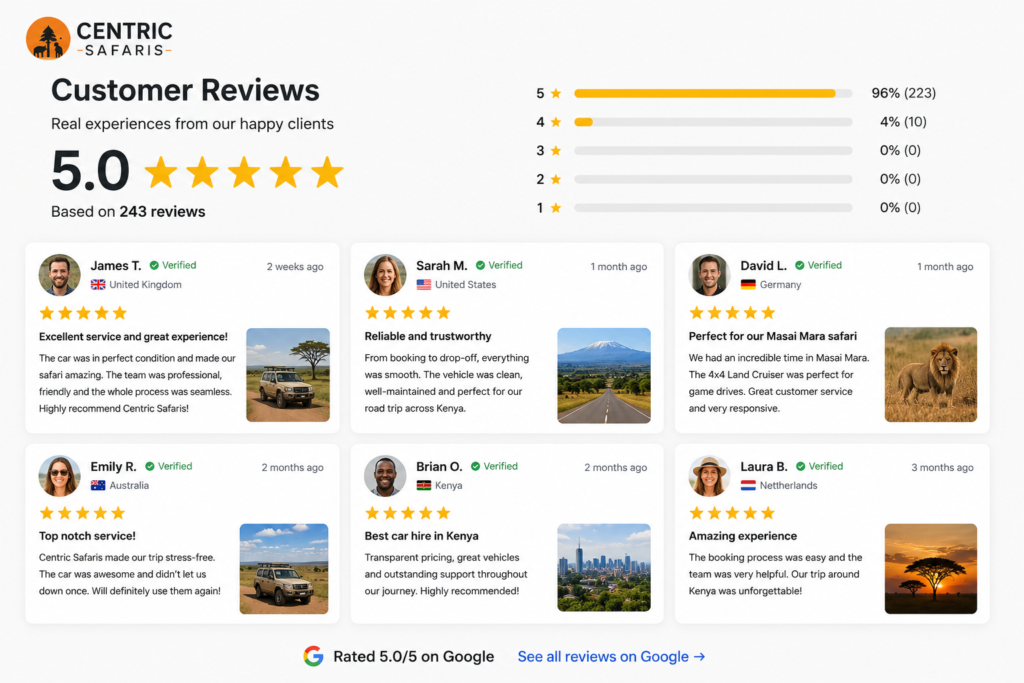
- TripAdvisor and Google Reviews for pattern complaints (breakdowns, hidden fees, poor communication)
- How recently reviews were posted — a company with strong reviews from five years ago but nothing recent may have changed since
- Whether the company responds to negative reviews professionally, which often says more about their service culture than the reviews themselves
7. Confirm Support Availability During Your Actual Travel Dates
A car hire company that’s excellent by email during business hours isn’t much help if your vehicle has an issue on a Sunday evening in Naivasha. Ask specifically:
- Is there a 24/7 emergency contact number?
- Who do you call if something goes wrong outside Nairobi?
- How quickly do they typically respond to an on-road issue?
This is especially important for safari self-drive trips, where cell coverage can be patchy and help may be hours away regardless of how fast the company responds.
Putting the Checklist Together
Here’s the short version, in the order to work through it:
- Insurance excess — get the exact figure, and ask what’s included versus billed extra
- Fleet age and maintenance — ask directly, don’t assume
- What’s actually included in the quoted price — mileage, fuel, delivery, add-ons
- Booking, payment, and cancellation terms — especially important for institutional bookings
- Self-drive vs. chauffeur-driven availability — match it to your actual trip
- Independent reviews — recent ones, not just curated testimonials
- 24/7 support during your travel dates — not just business hours
None of these questions are unreasonable to ask, and any operator confident in their service should be able to answer all seven clearly and quickly. If you get vague answers, evasiveness on pricing, or no clear support plan for after-hours issues, treat that as useful information in itself.
Frequently Asked Questions
What is a normal insurance excess for car hire in Kenya? Excess amounts vary by operator and vehicle type, so there’s no single “normal” figure — but it’s one of the first things to ask about, in exact currency terms, before comparing daily rates across companies. Always confirm whether CDW, TPW, or ELW charges are included in that figure or billed separately.
Do I need an International Driving Permit to self-drive in Kenya? Most car hire companies require a valid driving license from your home country, and many also ask international visitors for an International Driving Permit (IDP) alongside it. Requirements can vary by operator, so confirm directly with whoever you’re booking with before your trip.
Is self-drive or chauffeur-driven car hire better for a Kenya safari? It depends on your comfort level with local roads and park tracks. Self-drive offers more flexibility and privacy; chauffeur-driven removes the burden of navigation and unfamiliar road conditions, which many first-time visitors and larger groups prefer, especially for multi-day safari routes.
Can NGOs and corporates get invoiced car hire in Kenya instead of paying by card on the day? Reputable operators serving institutional clients typically offer formal invoicing, bank transfer payment, and documented contracts to support donor reporting and internal audits. It’s worth confirming this upfront, since not every car hire company is set up for institutional billing.
What should I do if my rental car breaks down outside Nairobi? Check before you travel whether your operator provides a 24/7 emergency contact number and roadside assistance that covers areas outside the city, including national parks and rural routes where cell coverage can be limited.
How far in advance should I book a car rental in Kenya? Booking ahead — particularly during peak safari season (July–October and December–January) — gives you more vehicle choice and time to confirm terms like insurance excess and cancellation policy in writing before you travel.
Final Thought
Choosing a car hire company in Kenya isn’t about finding the single cheapest daily rate — it’s about matching the right vehicle, support level, and terms to your specific trip, whether that’s a two-week self-drive safari, a six-month NGO field placement, or a three-day corporate visit. Going through this checklist before you book takes maybe fifteen minutes, and it’s fifteen minutes that can save you from a much longer headache later in your trip.
If you’re planning a rental in Kenya and want to talk through what fits your specific itinerary — self-drive or chauffeur-driven, short-term or long-term, tourist or institutional booking — get in touch with our team and we’ll help you figure out exactly what you need.